What Is Deep Specialization? The Strategy That Helps Agencies Stop Competing on Price
Corey Quinn
Founder, Deep Specialization™
What Deep Specialization™ is, why it works, and how specialized agencies attract better clients, close faster, and build more valuable businesses.
Most agencies think they’re competing on creativity, expertise, or execution.
They’re not.
They’re competing for attention. And if your agency sounds like every other agency, you’ve already lost.
That’s why I built Deep Specialization™.
It’s not a buzzword. It’s a deliberate strategy for building an agency that’s known for solving a specific problem for a specific market. You become the obvious choice instead of one of twenty open tabs.
Here’s what Deep Specialization™ actually means, why it works, and how it changes the way your agency grows.
What Is Deep Specialization™?
Deep Specialization™ means focusing your agency on one industry and going deeper than your competitors are willing to go.
You become known not just for what you do, but for who you do it for.
Instead of saying:
“We help businesses grow through marketing.”
You say:
“We help independent wealth management firms generate qualified investor leads.”
Instead of:
“We’re a branding agency.”
You become:
“The branding agency for multi-location pediatric dental practices.”
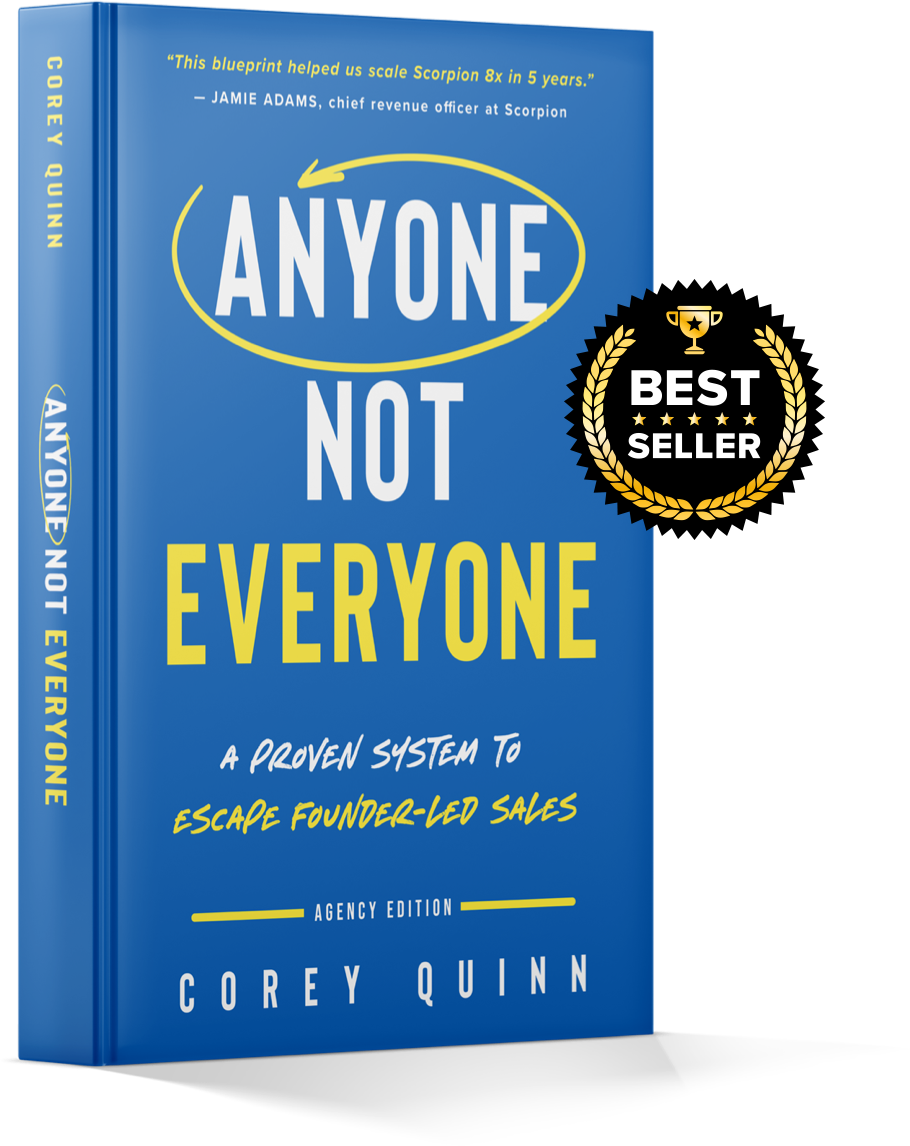
That’s the shift. You stop selling services and start selling expertise a buyer can’t get anywhere else. I make this case throughout Anyone, Not Everyone: agencies create far more value as specialists than as generalists chasing every possible client.
Specialization Is Not Just Picking a Niche
The biggest misconception I hear is that specialization means picking an industry and calling it a day.
That’s the starting line, not the finish.
Real specialization means you understand your market better than your competitors do. You know:
• The industry’s biggest challenges
• The language buyers use
• The regulations that shape their decisions
• The seasonal buying cycles
• The competitive landscape
• The metrics that matter
• The trends affecting growth
You’re not learning your client’s business after they hire you. You already understand it before the first discovery call.
That’s what builds confidence. And confidence closes deals.
Why Generalist Agencies Struggle
When agencies try to serve everyone, they end up sounding like everyone.
Their websites say:
• Results-driven
• Full-service
• Innovative
• Strategic partner
• Data-driven
Every competitor says the same five things. None of it tells a buyer why they should pick you.
When your positioning is broad, prospects have to do the work of figuring out if you’re a fit. Most won’t bother. They’ll move on to the agency that already speaks their language.
I cover this in Anyone, Not Everyone: broad positioning creates friction in the buying process, because the buyer never sees themselves in your messaging.
Why Deep Specialization Works
Deep Specialization™ changes the conversation. Instead of convincing a prospect you’re capable, you’re showing them you already get it.
That shows up everywhere in your business.
Your marketing gets stronger. You’re writing for one audience instead of dozens. Every article, webinar, podcast, and case study builds authority in the same industry. Your content compounds instead of starting from zero every time.
Your sales process gets simpler. Prospects don’t need a long explanation. They recognize their own problem in your messaging. The conversation shifts from proving credibility to discussing outcomes. That means shorter sales cycles, higher close rates, less price sensitivity, and better-qualified opportunities.
Your delivery becomes repeatable. When your clients look alike, patterns emerge. You build better onboarding, repeatable processes, proven frameworks, and industry-specific playbooks. Your team gets faster because they’re solving problems they’ve already solved.
Your reputation grows faster. Industries are small. When you consistently deliver results in one market, people talk. Clients refer peers. Partners send opportunities your way. Conference organizers put you on stage. Trade publications call for your take. Your name gets attached to one market instead of spread thin across ten. I talk about this in Anyone, Not Everyone: concentrated expertise creates momentum through referrals and visibility that generalist agencies never get.
Does Specialization Mean Turning Away Revenue?
Every agency owner asks this. “If I specialize, won’t I lose business?”
Fair question. But it assumes every opportunity is worth the same amount.
It’s not.
The real question is: which opportunities are already costing you the most?
Generalist agencies spend more time writing proposals, educating prospects, customizing delivery, and competing on price. Specialized agencies spend that time solving familiar problems for clients who already believe they’re the experts.
You’ll get fewer inbound inquiries. You’ll close far more of the right ones.
What Deep Specialization™ Is Not
Let’s clear up the myths.
Deep Specialization™ does not mean:
• Only offering one service
• Rejecting every client outside your niche
• Ignoring future opportunities
• Making yourself dependent on a tiny market
It means your positioning is focused, even when your capabilities are broad. Plenty of specialized agencies still offer strategy, branding, websites, paid media, SEO, content, and automation. The difference is that everything is built around one type of client.
Is Deep Specialization Right for Your Agency?
Consider it seriously if:
• Your website could describe hundreds of agencies
• Every proposal feels custom
• You’re constantly switching between industries
• Sales still run through the founder
• Referrals are inconsistent
• You’re competing on price instead of expertise
• Marketing isn’t generating qualified opportunities
If several of these hit close to home, you don’t have a sales problem. You have a positioning problem. And a positioning problem is exactly what Deep Specialization™ is built to fix.
What’s Next?
Understanding Deep Specialization™ is step one. Applying it is where the growth happens.
Next, I’ll break down why generalist agencies keep losing ground while specialists command higher trust, better clients, and stronger margins.
Next read: Generalists vs. Specialists: Which Agency Wins?
Or, if you’re ready to look at your own positioning, schedule a strategy conversation and find out whether Deep Specialization™ is the right move for your agency.
Key Takeaways
• Deep Specialization™ makes you the obvious choice for a specific market. It doesn’t limit your potential, it focuses it.
• It goes beyond picking a niche. You have to understand your market’s challenges, language, and buying behavior better than anyone else selling to them.
• Specialized agencies get clearer positioning, stronger marketing, simpler sales, and repeatable delivery.
• Narrowing your positioning doesn’t shrink your opportunity. It increases your relevance, trust, and long-term agency value.
• The goal isn’t to serve everyone. It’s to become indispensable to the right clients.
Frequently Asked Questions
What is Deep Specialization™?
Deep Specialization™ is a positioning strategy where an agency intentionally focuses on serving one industry or type of client instead of trying to appeal to everyone. It goes beyond naming a niche and requires genuinely understanding that market’s challenges, language, and buying behavior better than competitors do.
How is Deep Specialization different from just picking a niche?
Picking a niche is naming an industry on your website. Deep Specialization™ means actually understanding that industry’s biggest challenges, regulations, seasonal buying cycles, competitive landscape, and the metrics that matter to buyers before you ever get on a call with them.
Will specializing mean losing clients or revenue?
You’ll likely see fewer inbound inquiries, but you should close a much higher percentage of the right ones. Generalist agencies often spend more time and resources chasing opportunities that were never a great fit in the first place.
Does Deep Specialization™ mean only offering one service?
No. Plenty of specialized agencies still offer a full range of services, including strategy, branding, websites, paid media, SEO, content, and automation. What changes is that everything is built around one type of client, not the number of services offered.
How does specialization affect the sales process?
It shortens it. Instead of convincing a prospect you’re capable of doing the work, you’re showing them you already understand their problem. That shifts the conversation from proving credibility to discussing outcomes, which tends to shorten sales cycles and reduce price sensitivity.
How do I know if my agency needs to specialize?
Common signs include a website that could describe hundreds of other agencies, proposals that feel custom every time, sales that still run through the founder, inconsistent referrals, competing mainly on price, and marketing that isn’t generating qualified opportunities.
Does specialization make an agency more valuable long-term?
Yes. Concentrated expertise in one market tends to create compounding advantages: stronger marketing, faster sales cycles, more repeatable delivery, and a reputation that grows through referrals and visibility within that industry.
What’s the first step to applying Deep Specialization™?
Start by getting honest about whether your current positioning is broad enough to describe hundreds of other agencies. If it is, the next step is identifying the specific market and problem you’re best suited to own, which is covered in the next article on generalists versus specialists.
➡️ Discover Deep Specialization™
➡️ Book a Strategy Call
About Corey Quinn
Founder, Deep Specialization™
Corey helps founder-led agencies scale through Deep Specialization™ and programmatic M&A. Former CMO of Scorpion ($20M to $200M). Author of "Anyone, Not Everyone."