Generalists vs. Specialists: Which Agency Wins?
Corey Quinn
Founder, Deep Specialization™
Discover why specialized agencies consistently attract better clients, command higher fees, and grow faster than generalist agencies.
For years, agencies believed the path to growth was simple:
Offer more services.
Work with more industries.
Say yes to more opportunities.
It sounds logical. If you can serve everyone, you'll have a bigger market. Right?
Not exactly.
Today's buyers aren't looking for agencies that can do the work. They're looking for agencies that already understand their business.
That's why specialized agencies consistently outperform generalists. They're easier to trust, easier to buy from, and easier to recommend.
The question isn't whether your agency is capable of serving multiple industries. The question is whether trying to serve everyone is preventing you from becoming the obvious choice for anyone.
What Is a Generalist Agency?
A generalist agency serves clients across a wide range of industries, often offering a broad menu of services.
Its website might say:
Healthcare
Manufacturing
SaaS
Professional services
Retail
Nonprofits
Hospitality
Its service list might include:
Branding
Websites
SEO
PPC
Social media
Content marketing
Email marketing
Automation
There's nothing inherently wrong with this model. Many successful agencies started this way.
The problem comes when broad capabilities become broad positioning. If every prospect sees the same generic message, no one feels like it's written specifically for them.
What Is a Specialized Agency?
A specialized agency narrows its positioning around a specific market.
Instead of saying,
"We help businesses grow."
It says,
"We help commercial roofing companies generate qualified leads."
Or,
"We help orthodontic practices increase patient acquisition."
Notice the difference?
The services may be identical. The positioning isn't.
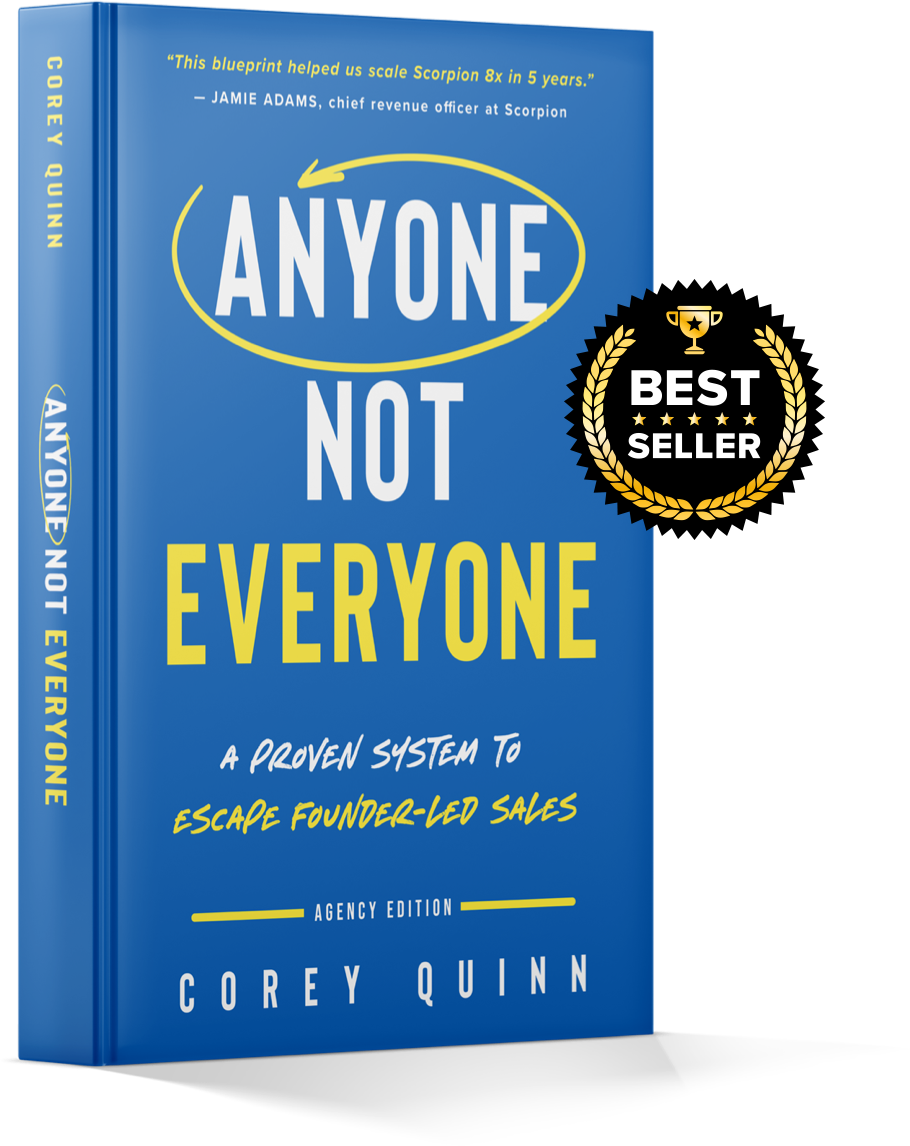
Deep Specialization™ isn't about limiting what your agency can do. It's about making it immediately obvious who you do your best work for. As I explain in Anyone, Not Everyone, agencies create differentiation by becoming known within a specific vertical rather than competing as a generalist.
Why Buyers Prefer Specialists
Imagine you need knee surgery.
Would you choose:
A general physician who performs many different procedures?
Or:
An orthopedic surgeon who specializes in knees?
Most people don't hesitate. They choose the specialist.
Business buyers behave the same way. When an agency demonstrates a deep understanding of an industry's challenges, language, regulations, competitors, and customer behavior, prospects naturally assume it can deliver better results.
That's not because specialists are always more talented. It's because specialization reduces uncertainty. And uncertainty is one of the biggest barriers to buying.
The Biggest Difference Isn't Expertise—It's Trust
Agency owners often think specialization is about becoming better at marketing.
It's not. It's about making buyers feel understood.
Generalists spend much of the sales process proving they can learn the client's business. Specialists spend that same time discussing strategy because they've already demonstrated credibility through their positioning.
That's a very different sales conversation. As I emphasize in Anyone, Not Everyone, buyers respond more confidently when they believe the agency already understands their market, reducing friction throughout the sales process.
Where Generalists Struggle
Generalist agencies often face the same recurring challenges.
Generic Messaging
If your homepage could belong to hundreds of agencies, it probably isn't creating differentiation. Words like:
Strategic
Innovative
Full-service
Results-driven
Don't help prospects understand why you're uniquely qualified.
Longer Sales Cycles
Generalists usually spend more time educating prospects about their experience. Every proposal begins with proving credibility. Specialists often skip this step because their expertise is already implied.
Increased Price Pressure
When agencies appear interchangeable, buyers compare prices. When agencies appear uniquely qualified, buyers compare value. That's a very different buying decision.
Less Efficient Delivery
Serving ten different industries means learning ten different customer journeys, regulations, buying processes, and competitive landscapes. Every project requires additional research. Every engagement starts closer to zero.
Why Specialists Grow Faster
Specialized agencies benefit from something many generalists never achieve: momentum.
Every successful project strengthens their reputation within the same industry. Every case study becomes more relevant. Every referral reaches another ideal prospect. Every conference presentation builds authority. Every podcast appearance reinforces expertise.
Instead of spreading credibility across dozens of markets, specialists concentrate it.
That's why Deep Specialization™ creates compounding advantages over time. I describe in Anyone, Not Everyone how industry focus fuels referrals, partnerships, and long-term authority within a vertical.
Does Being a Specialist Mean Offering Fewer Services?
No. This is one of the biggest misconceptions about agency specialization.
Many specialized agencies still provide:
Brand strategy
Website design
SEO
Paid media
CRM implementation
Marketing automation
Content marketing
The difference isn't the services. The difference is the audience.
The same expertise becomes significantly more valuable when it's packaged around the needs of one market. Your positioning becomes focused. Your capabilities remain flexible.
Generalists vs. Specialists: A Side-by-Side Comparison
Generalist Agency
Specialized Agency
Broad positioning
Clear positioning
Serves many industries
Focuses on one primary industry
Generic messaging
Industry-specific messaging
Must prove credibility
Credibility is assumed
Longer sales cycles
Faster buying decisions
Higher price sensitivity
Greater willingness to pay
Custom processes
Repeatable systems
Broad reputation
Deep industry authority
Notice that none of these differences come from working harder. They come from working with greater focus.
When Staying a Generalist Makes Sense
Deep Specialization™ isn't the right strategy for every agency.
If you're:
Just getting started.
Still validating your services.
Building your initial portfolio.
Exploring multiple industries intentionally.
Remaining a generalist may be the right decision—for now.
Early on, breadth creates learning. But as your agency matures, continued breadth often creates complexity instead of growth.
The goal isn't to specialize too early. It's to recognize when broad positioning has become your biggest obstacle.
How Do You Know It's Time to Specialize?
You may be ready if:
Your website sounds like every other agency.
Most proposals are built from scratch.
Sales rely heavily on the founder.
Marketing isn't attracting qualified opportunities.
You're constantly switching between industries.
Clients compare you primarily on price.
Growth has slowed despite delivering good work.
These are rarely execution problems. They're positioning problems.
The Competitive Advantage of Deep Specialization™
Generalists compete by saying,
"We can do that."
Specialists compete by saying,
"We've solved this exact problem dozens of times."
One creates curiosity. The other creates confidence.
That's why Deep Specialization™ isn't about shrinking your market. It's about increasing your relevance within the market you choose. And relevance is what separates agencies that compete for projects from agencies that become the obvious choice.
What's Next?
Understanding the difference between generalists and specialists is only part of the equation.
The next question is the one almost every agency owner asks: if I niche down, won't I lose clients?
In the next article, we'll explain why the opposite is usually true—and how narrowing your focus often leads to more qualified opportunities, stronger positioning, and faster growth.
Next Read: Why Niching Down Actually Gets You More Clients
Key Takeaways
Generalist agencies compete across many industries, while specialized agencies position themselves as experts in one market.
Buyers are more likely to trust agencies that demonstrate deep industry expertise before the sales conversation even begins.
Specialization reduces price pressure by shifting the conversation from capabilities to relevance and outcomes.
Specialized agencies build authority faster because every client, case study, referral, and marketing asset reinforces expertise within the same vertical.
Deep Specialization™ isn't about offering fewer services; it's about creating a positioning strategy that makes your agency the obvious choice for the clients you want most.
Frequently Asked Questions
What is the difference between a generalist and a specialist agency?
A generalist agency serves clients across many industries with a broad menu of services. A specialized agency narrows its positioning around a specific market, so it's known for solving a particular problem for a particular type of client, even if the underlying services are similar.
Do specialized agencies really grow faster than generalist agencies?
Specialization tends to create momentum. Every case study, referral, and piece of content reinforces the same reputation within one industry rather than being spread across many unrelated markets, which compounds over time in a way generalist positioning rarely does.
Does specializing mean my agency has to offer fewer services?
No. Many specialized agencies still offer the same range of services as generalists, including brand strategy, web design, SEO, paid media, and marketing automation. What changes is the audience, not the capability list.
Will I lose clients if I niche down?
Narrowing your positioning can feel like it shrinks your market, but it usually increases your relevance to the buyers who matter most. That tradeoff is explored further in the next article, Why Niching Down Actually Gets You More Clients.
When does it make sense to stay a generalist?
Staying broad can make sense early on, while you're still validating your services, building your first portfolio, or intentionally exploring multiple industries. Breadth creates useful learning in the beginning; the risk is holding onto it too long.
How do I know if my agency should specialize?
Common signs include a website that sounds like every other agency, proposals built from scratch every time, sales that rely heavily on the founder, marketing that isn't attracting qualified leads, and clients who mostly compare you on price. These usually point to a positioning problem rather than an execution problem.
Why do specialized agencies face less price pressure?
When agencies look interchangeable, buyers default to comparing price. When an agency is clearly the specialist for a given problem, the comparison shifts from price to value and relevance, which reduces downward pressure on fees.
Does specialization only apply to marketing agencies?
No. The same principle applies broadly. Any service business can experience the same shift in trust and buying behavior when it positions itself around a specific market instead of trying to serve everyone.
What is Deep Specialization?
Deep Specialization™ is the strategy of intentionally focusing an agency's positioning around a specific vertical market to create a distinctive advantage, rather than trying to remain relevant to every possible buyer.
What should I read next to learn how to specialize?
Start with Why Niching Down Actually Gets You More Clients, then Positioning That Makes Selling Easier and How to Pick the Right Industry, which walk through the practical steps of choosing and owning a market.
➡️ Discover Deep Specialization™
➡️ Book a Strategy Call
About Corey Quinn
Founder, Deep Specialization™
Corey helps founder-led agencies scale through Deep Specialization™ and programmatic M&A. Former CMO of Scorpion ($20M to $200M). Author of "Anyone, Not Everyone."