Prepare and sell.
Selling a marketing agency well takes years of preparation, not a phone call to a broker.
Rate yourself before a buyer does.

Most founders start too late.
A sale is not a call, an offer, and a signature. It is the last stage of a much longer process.
The buyer will find your weaknesses. The whole point of preparation is that you find them first—while you still have time to fix them.
What you build decides who will buy it.
Two agencies with similar profit can get very different offers. The gap usually comes down to three things: how much the business depends on the founder, how predictable the revenue is, and how big it is. Those same three things decide which buyers will take a serious look.
2–4x EBITDA
Founder-dependent agency. Buyers are often individuals or other small agencies. Because so much depends on the owner, a large share of the price is usually tied to an earnout.
6–8x EBITDA
An agency that runs without its founder. It has recurring revenue, documented systems, and a leadership team that owns the results. This is the kind of business private equity and larger strategic buyers look for, usually once EBITDA reaches a few million.
The headline number is not what you receive.
Enterprise value gets announced. Structure decides what lands in your account.
Cash at close
The only guaranteed piece.
Earnout
Future payment tied to performance.
Rollover equity
A bet on the buyer’s next chapter.
Holdbacks
Money reserved for warranties and adjustments.
Most sellers focus on the price. Experienced sellers look just as hard at how and when they'll be paid.
A sale runs in four phases.
By negotiation, most of what determines your price was decided months—or years—earlier.
Preparation
Build exit readiness while you still control the timeline.
Marketing
Create real buyer interest—and the leverage to walk away.
Negotiation
Move from first interest to a signed letter of intent.
Documentation & close
Complete confirmatory diligence and reach closing day.
12–18 months from the decision to sell through a clean exit—after preparation.
Start here.
Thirteen topics, in the order most founders find useful.
The complete series / 13 articles
How Much Is My Marketing Agency Worth?
Start with normalized EBITDA.
How Are Marketing Agencies Valued?
Follow the steps behind a credible valuation.
When Should I Start Preparing My Agency for Sale?
Earlier than you think.
A 24-Month Plan for Preparing an Agency for Sale
Fix the right things in the right order.
What EBITDA Multiple Will My Agency Receive?
See what determines where you land.
Strategic Buyer vs. Private Equity
Choose the deal that fits what comes next.
How Long Does Selling an Agency Take?
Understand the years you have not counted.
What Happens After You Receive an LOI?
A signed letter is not the finish line.
How Earnouts Work in Agency Acquisitions
Know what is at risk and why.
How Rollover Equity Works
Decide whether to bet on the next chapter.
What Buyers Examine During Due Diligence
See what gets checked first.
Should I Hire an M&A Advisor to Sell My Agency?
Know where guidance changes the outcome.
How Do I Know Whether My Agency Is Ready to Sell?
Measure readiness instead of guessing.

I’ve spent my career on both sides of growth.
- $20M → $200M+
- ARR growth while CMO at Scorpion
- 21 quarters
- as the top enterprise seller at The Search Agency
- Bestselling author
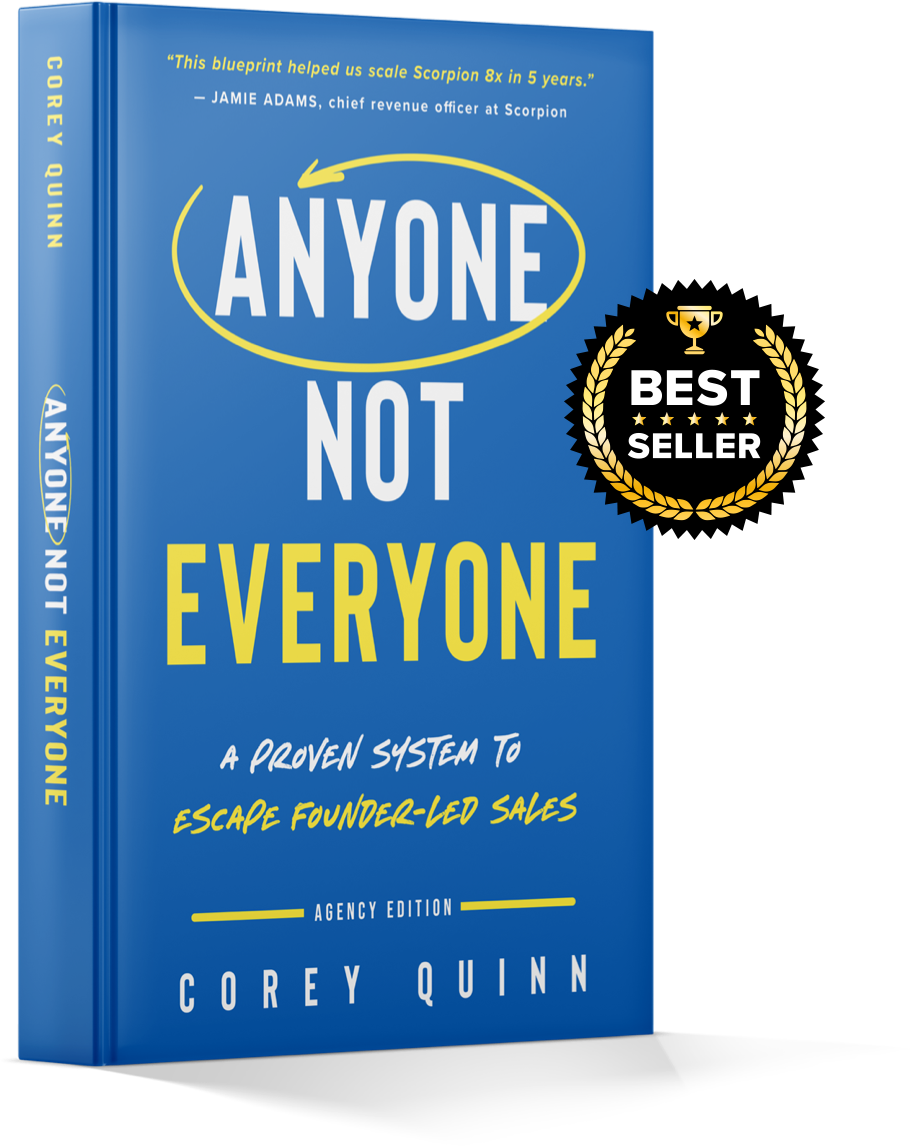
- of Anyone, Not Everyone
Today, I sit on the board side of founder-led agencies as an advisor on growth, acquisition, and exit.
Explore the bookAgency Value Creation
Revenue and enterprise value aren’t the same thing. Here’s the thesis behind building, acquiring, and selling a more valuable agency, and where to start.
Build a More Valuable Agency
Revenue isn’t enterprise value. Here’s what actually makes a marketing agency valuable, transferable, and worth more to a future buyer.
Programmatic M&A for Agencies
Buying agencies isn’t a one-off event. Here’s how programmatic M&A works, why it beats organic growth alone, and how to run it as a repeatable system.
Frequently asked questions
How far in advance should I start preparing to sell?
Eighteen to 24 months is the realistic window for the levers that move your price: founder dependence, client concentration, and revenue quality. Buyers look at a three-year average of earnings, so earlier work gives you a stronger record.
Do I need an M&A advisor to go through this process?
Not for the early preparation work. Once you decide to sell, do not run the process alone—or hand it wholesale to a broker. Game out each step with someone who has been on both sides of the table.
What if I get an unsolicited offer before I am ready?
An unsolicited offer does not obligate you to sell on the buyer’s timeline. Treat it as information. First, get a clear read on concentration and readiness so you negotiate from a position you chose.
Is a strategic buyer always better than private equity?
No. Each one suits a different kind of seller. A strategic buyer, usually another agency or a company in your space, often folds your agency into theirs and may pay more when the fit is strong. A private equity firm usually keeps the agency running as it is and often asks you to keep a share of the company, which can pay off again when they sell it later. If you want a cleaner exit, a strategic buyer often fits better. If you want to stay involved and keep some upside, private equity may suit you better.
Find the weaknesses before a buyer does.
Get a clear read on where your agency stands and what to fix first.