How Rollover Equity Works
Corey Quinn
Founder, Deep Specialization™
Rollover equity means betting part of your payout on the next chapter instead of cashing out entirely. Here's how it typically works and what to weigh before agreeing to it.
Rollover equity means you reinvest part of your sale proceeds into the buyer's platform instead of taking the full amount in cash at close. You end up owning a stake in something larger, betting on its combined upside instead of walking away entirely.
Why buyers, especially private equity, like this structure
It aligns your incentives with theirs after close, since you now have a real stake in the platform performing well, not just in getting through diligence and collecting a check. It also reduces the buyer's cash requirement at close, which matters more in larger or more highly leveraged platform deals.
Why sellers agree to it
Done well, rollover equity is a second bite at a bigger apple. If the platform grows and eventually sells again, or goes public, at a higher valuation, your rolled equity can be worth considerably more than the cash you gave up at the first close. It's also a way to stay meaningfully involved in something larger than your standalone agency, if that appeals to you.
The real risk you're taking on
Rollover equity isn't guaranteed. Its value depends entirely on how the larger platform performs, and you may have limited control over decisions once you're one owner among several. You're extending your risk exposure to the platform's future instead of locking in a known outcome the way cash at close does.
What to evaluate before agreeing to it
Look at three things: the platform's own track record and thesis, not just your own agency's numbers; your actual governance rights and influence once you're a minority stakeholder; and the realistic timeline and mechanism for a future liquidity event, since equity you can't eventually convert to cash isn't the same as cash today.
Common mistakes
Sellers treat rollover equity as equivalent in value to the cash they're giving up, without weighing the additional risk and the loss of control that comes with it. It can be a genuinely good structure. It isn't a like-for-like substitute for cash.
Equity roll terms, governance rights, and tax treatment are specific to the transaction. Talk to your own M&A attorney and tax advisor before you evaluate a specific rollover offer.[5]
Frequently Asked Questions
Is rollover equity common in agency acquisitions?
It shows up often in private equity-backed platform deals, less commonly in smaller strategic acquisitions, though it's not exclusive to either buyer type.
How much of my deal should I expect to roll over?
There's no fixed standard. It varies by buyer, deal size, and how much the buyer wants your continued alignment. It's a negotiated term, not a market constant.
Can I sell my rollover equity later?
It depends entirely on the specific agreement and the platform's own liquidity events. Some structures include a defined path to a future sale. Others leave it considerably less certain. Review this closely before agreeing.
Should I take less rollover equity if I'm not confident in the platform?
That's a reasonable instinct to follow. Rollover equity is a bet on someone else's execution as much as your own, and your confidence in that execution should shape how much of your proceeds you put at that risk.
About Corey Quinn
Founder, Deep Specialization™
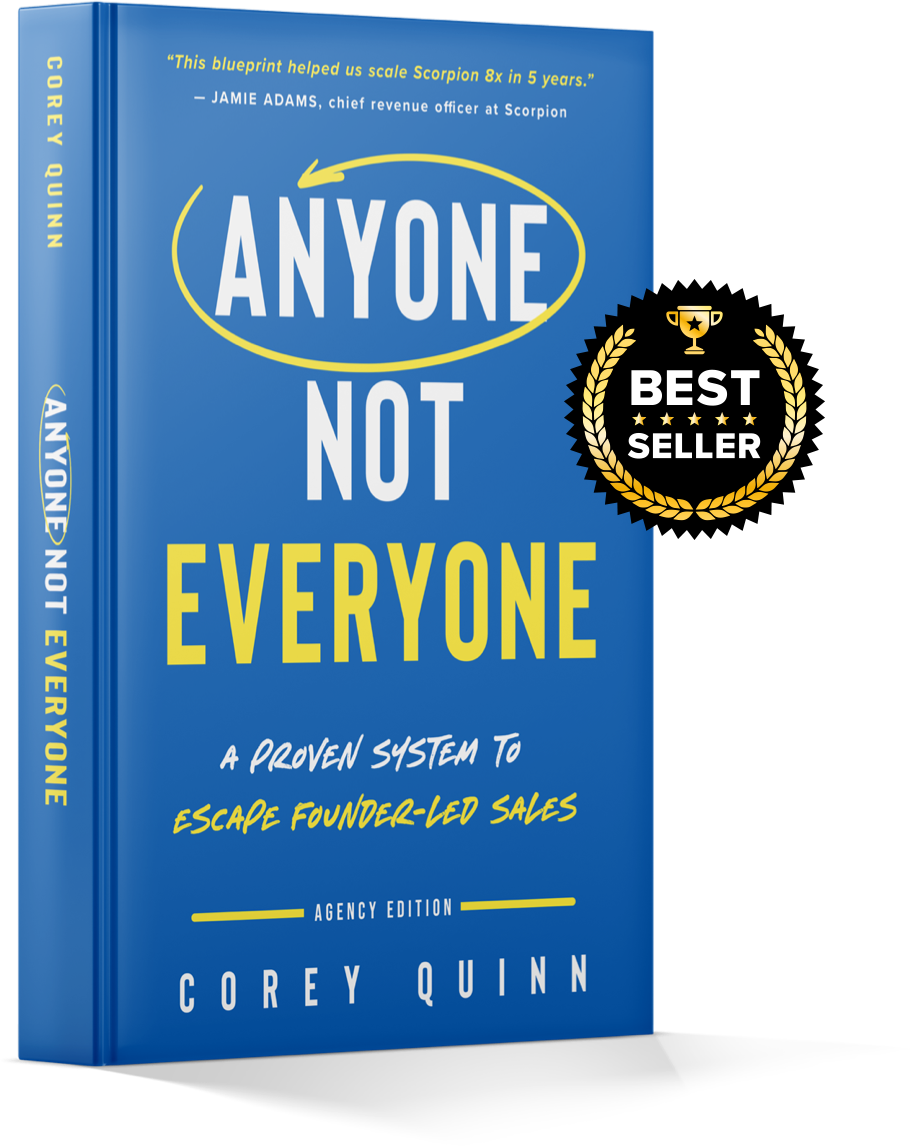
Corey helps founder-led agencies scale through Deep Specialization™ and programmatic M&A. Former CMO of Scorpion ($20M to $200M). Author of "Anyone, Not Everyone."