Understanding the problem
Corey Quinn
Founder, Deep Specialization™
If acquisition costs are too high and churn feels uncomfortable, it may be time to sharpen your understanding of the problem. Learn the 5 questions to ask current customers.
If your cost to acquire a new customer is too expensive, and your customer churn is uncomfortably high, it may be time to sharpen your understanding of the problem you're solving.
The best source is your current customers.
Ask them:
1. What were the biggest challenges with the old solution? (the one you replaced)
2. What were the consequences of doing it the old, broken way?
3. What caused them to finally make a switch? (there's usually a breaking point)
4. What changed when they used your product?
5. How would they describe (your product) to a colleague?
Do this with 5-10 customers.
Codify the patterns.
Adjust accordingly.
Have a great day!
CQ
Frequently Asked Questions
Why does high acquisition cost combined with high churn point toward a problem-understanding gap?
Because both symptoms often trace back to messaging or product-market fit not fully aligning with the real problem being solved, an issue best diagnosed by going directly to current customers rather than guessing internally.
Why are current customers the best source for sharpening problem understanding?
Because they've already lived through the actual decision-making process, including what didn't work before and what changed once they switched, real insight that's far more reliable than internal assumptions about the problem.
What are the 5 questions worth asking current customers to diagnose this?
What were the biggest challenges with the old solution, what were the consequences of the old, broken way, what caused the final switch, what changed after using the product, and how would they describe it to a colleague.
Why does asking "how would they describe your product to a colleague" matter specifically?
Because it reveals the actual language a customer would use to explain the value, language that often differs from internal marketing copy and can directly improve how the problem and solution are communicated.
What should happen after gathering answers from 5-10 customers using these questions?
Codifying the patterns found across their responses, then adjusting messaging and positioning accordingly, turning direct customer insight into concrete changes rather than letting the findings sit unused.
About Corey Quinn
Founder, Deep Specialization™
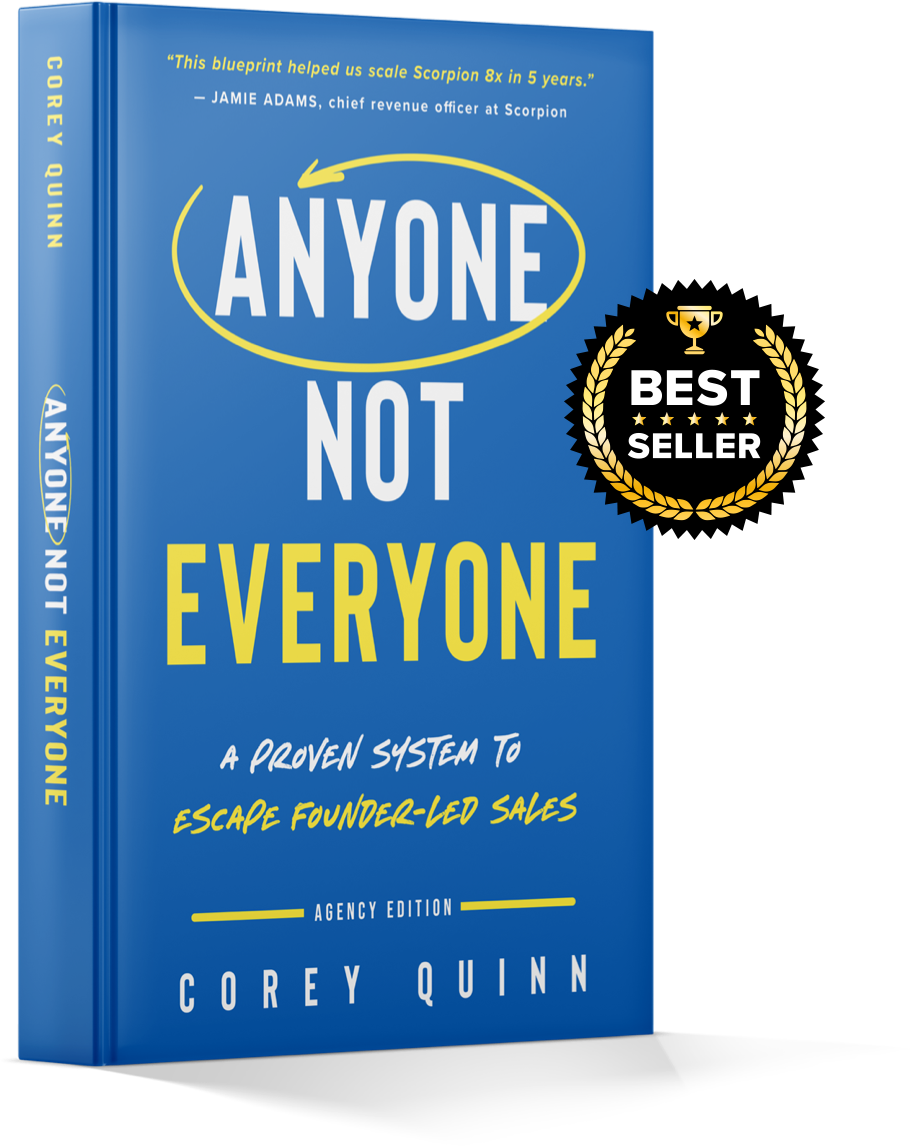
Corey helps founder-led agencies scale through Deep Specialization™ and programmatic M&A. Former CMO of Scorpion ($20M to $200M). Author of "Anyone, Not Everyone."