Why Setting an Agenda Saves Sales Calls
Corey Quinn
Founder, Deep Specialization™
Build trust and set the stage for success in just one minute...
Ever had a sales call go off the rails?
You're not alone.
Most sales calls are a mess.
But there's a simple fix: Set an agenda.
Here's why it works:
Relaxes the buyer
Shows you're a pro
Keeps everyone focused
Gets buy-in from the start
Saves time (yours and theirs)
The best part?
It takes less than a minute.
Here's how to do it:
Thank them for their time
Outline 3-4 key points you'll cover
Ask if they want to add anything
Example:
"Thanks for jumping on, Sarah. Today we'll cover:
Your current challenges
Our solution
Next steps
Anything you'd like to add?"
Simple. Effective. Powerful.
Try it on your next call.
CQ
Frequently Asked Questions
Why do so many sales calls go off the rails?
Because there's no structure guiding the conversation. Without an agenda, calls tend to wander, leaving both sides less focused than they could be.
How does setting an agenda actually relax the buyer?
Because it removes uncertainty about what the call will cover. Knowing what to expect lowers the guard a prospect might otherwise have going into an unstructured conversation.
What does setting an agenda signal about the person leading the call?
Professionalism. Taking a minute to outline the structure shows preparation and confidence, which builds trust before the substantive conversation even begins.
How much time does setting an agenda actually take?
Less than a minute. A quick thank you, an outline of 3-4 key points, and a question about anything the prospect wants to add is enough to set the stage.
What does a simple agenda actually sound like in practice?
Something like, "Thanks for jumping on, Sarah. Today we'll cover your current challenges, our solution, and next steps. Anything you'd like to add?" Short, clear, and focused.
About Corey Quinn
Founder, Deep Specialization™
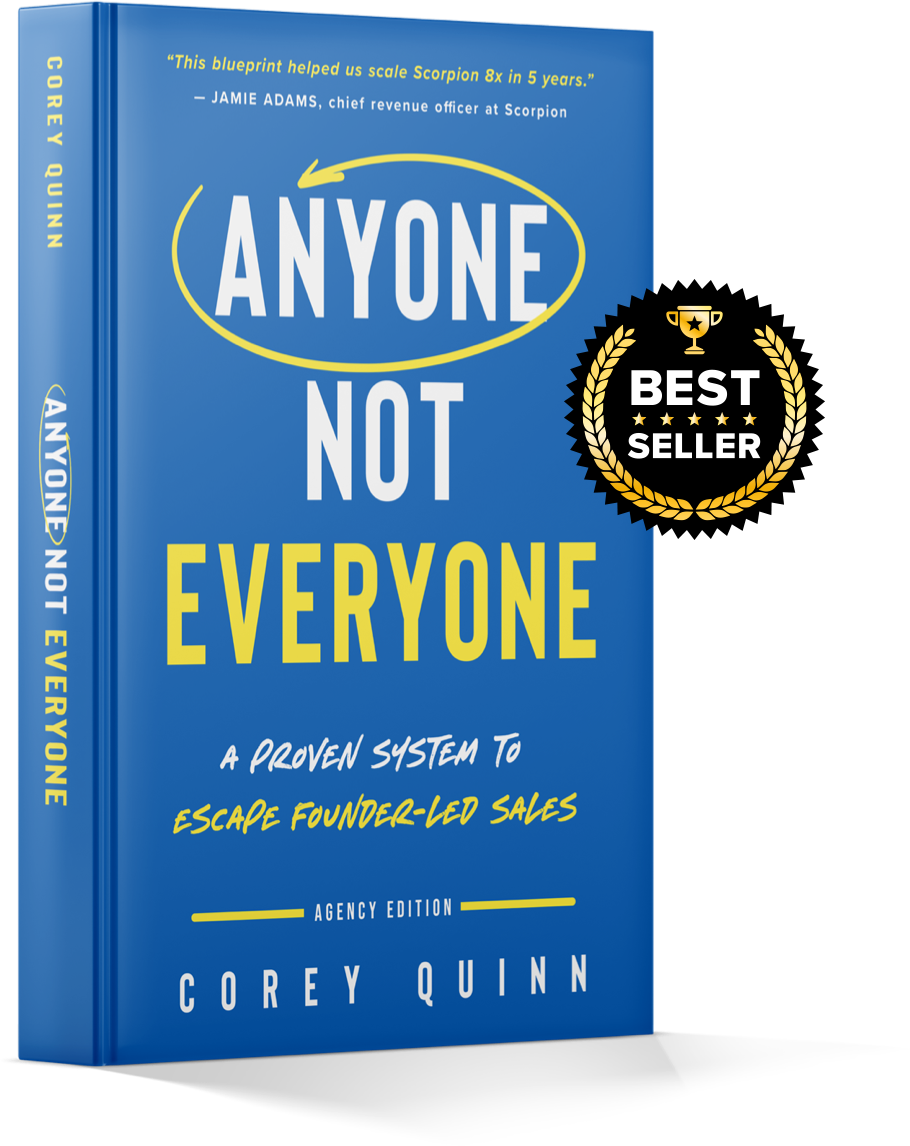
Corey helps founder-led agencies scale through Deep Specialization™ and programmatic M&A. Former CMO of Scorpion ($20M to $200M). Author of "Anyone, Not Everyone."