Stop Assuming Exclusivity—Turn It Into a Scalable Offer
Corey Quinn
Founder, Deep Specialization™
Assumptions kill growth. Learn how top agencies turn client exclusivity into defined, tiered offers that create revenue, not bottlenecks in vertical markets.
Nathan runs a law firm-focused agency.
After landing a strong criminal defense client in San Diego, he paused outreach to similar firms.
The client didn’t ask for exclusivity.
Nathan just assumed they expected it.
That one assumption cost him six figures of revenue.
All because of a story he never said out loud.
Here's what the top 1% of agencies do differently:
They never fight invisible forces.
Exclusivity isn’t a vibe. It’s a clause.
If a client wants it, it goes in writing: defined, priced, time-boxed.
City, practice area, duration, fee.
Everything else is just a handshake with a bottleneck.They don’t turn one fear into a business rule.
One client doesn’t want you working with competitors.
Fine.
That doesn’t mean every client will feel that way.
Letting one insecure voice shape your strategy is how you lose opportunity.They package exclusivity as a premium, not a pause.
Platinum: full region lockout
Gold: zip-code ownership
Standard: no exclusivity, full strategic separation
Now you're negotiating from the front foot.
You're selling confidence.
For example:
At Scorpion, we saw this constantly.
Exclusivity requests were common.
We stopped tiptoeing and started tiering.
Everything changed.
What’s it costing you?
Now zoom out.
Imagine five clients like Nathan’s.
Each one “expects” exclusivity.
That’s five cities. Maybe five practice areas.
And just like that, the vertical you should own is now fenced off by assumptions.
Make this yours:
If your next prospect asked for exclusivity, how would you respond?
Could you define it? Price it? Limit it?
Or would you freeze like Nathan?
Here’s the thing…
You don’t need permission to scale.
You need better boundaries.
The smartest agencies don’t avoid competition.
They design around it.
Frequently Asked Questions
Should agencies offer exclusivity to clients?
Sometimes, but never by accident. Exclusivity is a real business decision, not a favor you grant to keep a client happy. If a client wants it, spell out exactly what's restricted, where, for how long, and what they're paying for that protection. Handshake exclusivity is how you accidentally box yourself out of your own market.
How should an agency price client exclusivity?
Price it like the premium it actually is. Every client you lock out to protect this one is revenue you're giving up, so the fee needs to reflect that, not just the scope of work but the market, geography, and duration you're agreeing to sit out of.
What should be included in an agency exclusivity agreement?
Draw the actual boundaries. Geography, industry segment, how long it lasts, which services it covers, and the fee attached to it. Put it in writing. Vague exclusivity is how "just this one client" quietly turns into a restriction you never agreed to.
Can client exclusivity limit agency growth?
Absolutely, and it's usually self-inflicted. Grant enough loose, undefined exclusivity across enough clients and you've fenced yourself out of the exact market you specialized in to dominate. You built Deep Specialization™ to own that vertical, not to hand pieces of it away one handshake at a time.
How can specialized agencies offer exclusivity without limiting scale?
Build tiers instead of open-ended promises. Regional exclusivity at one price, ZIP-code-level exclusivity at another, and a standard engagement with no exclusivity at all as the default. Now exclusivity is a defined product with a price tag, not an unlimited restriction you granted without thinking through what it would cost you later.
About Corey Quinn
Founder, Deep Specialization™
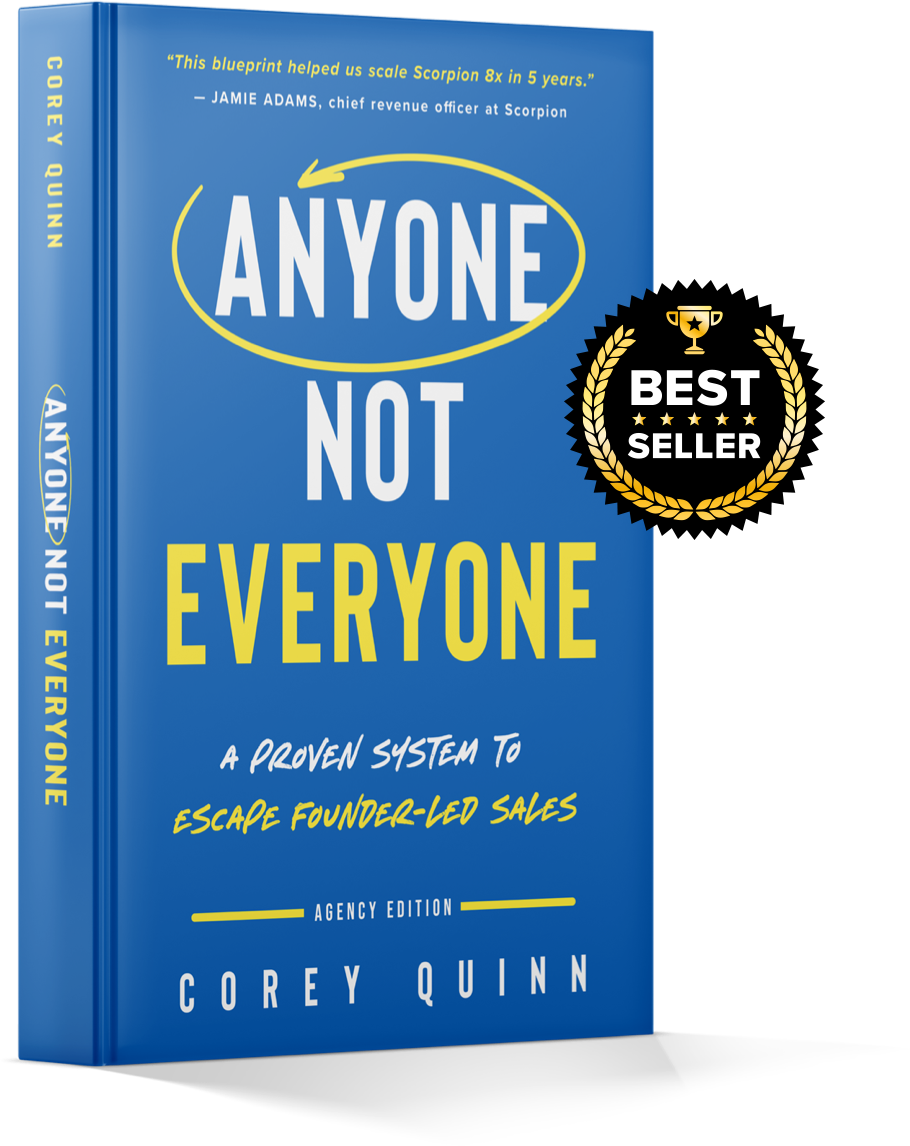
Corey helps founder-led agencies scale through Deep Specialization™ and programmatic M&A. Former CMO of Scorpion ($20M to $200M). Author of "Anyone, Not Everyone."