The Elon Musk principle that exposed my client
Corey Quinn
Founder, Deep Specialization™
It's not Netflix killing your productivity - it's this sneaky form of procrastination...
Had a fascinating conversation with an agency owner today that reminded me of one of Elon Musk's most powerful principles.
He was planning to build an automated sales tracking system for his future sales team.
Only problem? He doesn't have a sales team yet.
It's a common trap I see agency owners fall into:
Building systems for problems we don't have
Automating processes we haven't validated
Optimizing workflows that might not even need to exist
Sound familiar?
Here's what I advised instead:
Start manual
Find what works
Do it until it hurts
THEN automate
Here’s the thing…the most dangerous form of procrastination for agency owners isn't Netflix - it's productive-looking busy work that doesn't drive revenue.
The lesson?
Don't spend resources optimizing something that shouldn't exist in the first place.
Today's challenge: Look at your to-do list. What are you trying to optimize that maybe shouldn't exist at all?
Frequently Asked Questions
Why is building systems before validating the need for them a trap?
Because it looks productive without actually driving revenue. Automating a process before confirming it's needed means solving a problem that might not even exist yet.
What's the actual order that should come before automation?
Start manual, find what actually works through doing it directly, keep doing it until it hurts, and only then automate. Skipping straight to automation means optimizing guesswork instead of something proven.
What was the specific mistake in the sales tracking system example?
Building the system before having a sales team to use it. The tool was solving for a future problem that didn't exist yet, instead of a current, validated need.
Why is this kind of busy work described as more dangerous than something like Netflix?
Because it looks like real progress while quietly avoiding the harder, revenue-driving work. Time spent optimizing something unnecessary feels productive without actually moving the business forward.
How do I check if I'm falling into this trap?
Look at the current to-do list and ask which items are optimizing something that might not need to exist yet at all. That question tends to surface exactly where effort is being misdirected.
About Corey Quinn
Founder, Deep Specialization™
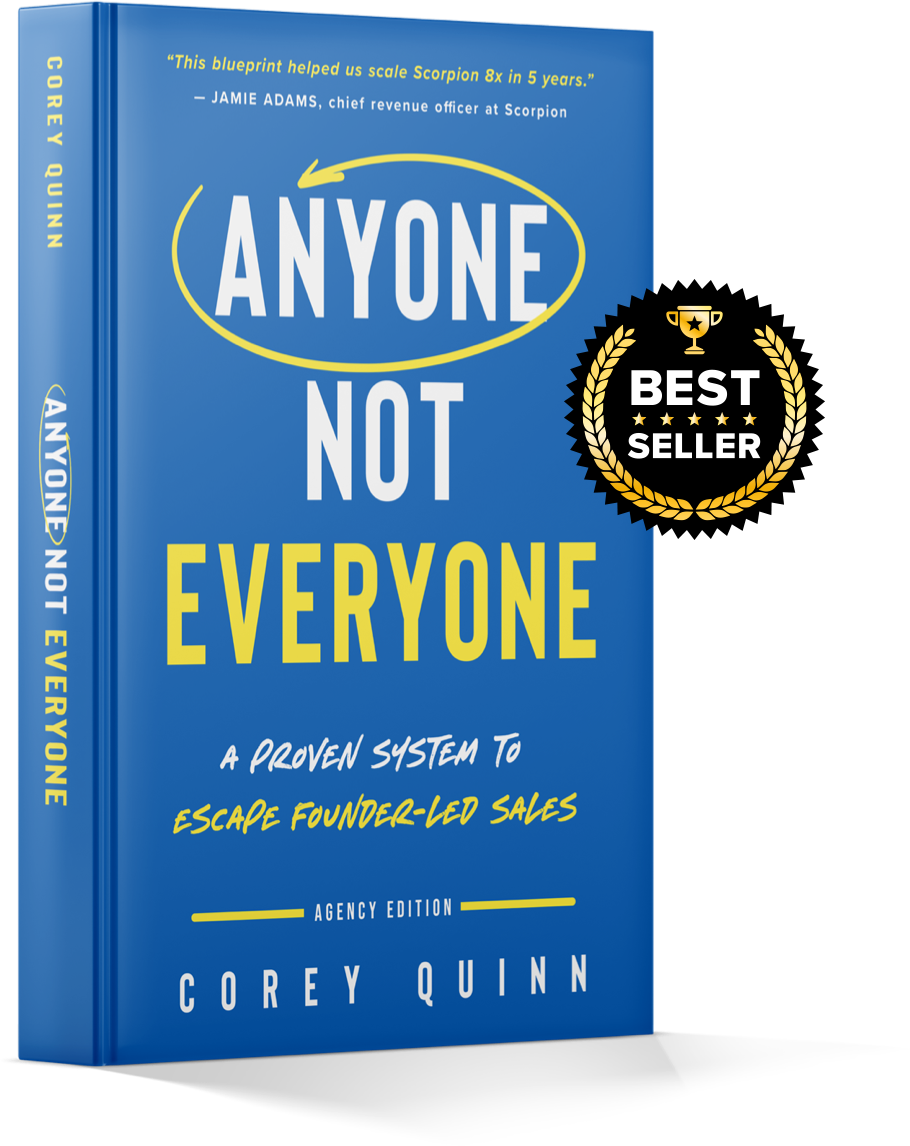
Corey helps founder-led agencies scale through Deep Specialization™ and programmatic M&A. Former CMO of Scorpion ($20M to $200M). Author of "Anyone, Not Everyone."