How to stand out in a crowded market
Corey Quinn
Founder, Deep Specialization™
Who is your Villain?
Who is your Villain?
A Villain is your buyer's Status Quo.
You know...the old, outdated way of doing things.
But personified and vilified.
For Salesforce, it was Software
For Drift, it's Forms
For my mentor and author Jonathan Stark, it's Hourly Billing
Publicly attacking your Villain (the status quo) helps you differentiate.
And stand out to potential clients who are seeking an alternative to traditional offerings.
So, do you have a Villain?
Frequently Asked Questions
What is a "Villain" in this positioning framework?
The buyer's status quo, the old, outdated way of doing things, personified and vilified as an actual opponent rather than described neutrally as a common industry practice.
How did Salesforce use this concept in its own positioning?
By making "Software" itself the Villain, framing traditional installed software as the outdated status quo being replaced, rather than positioning against a specific named competitor.
How did Drift apply the same concept to its own market?
By making "Forms" the Villain, positioning traditional lead-capture forms as the old, frustrating status quo that its product replaced with something better.
Why does attacking a "Villain" help differentiate a business?
Because it gives buyers something concrete and relatable to reject, rather than a vague claim of being better. Publicly opposing a specific status quo creates a clear alternative narrative buyers can align with.
What's the actual question worth answering to apply this concept?
Whether a clear "Villain," a specific status quo practice, has been identified and is being actively positioned against, something the business genuinely believes is worth publicly opposing on behalf of its buyers.
About Corey Quinn
Founder, Deep Specialization™
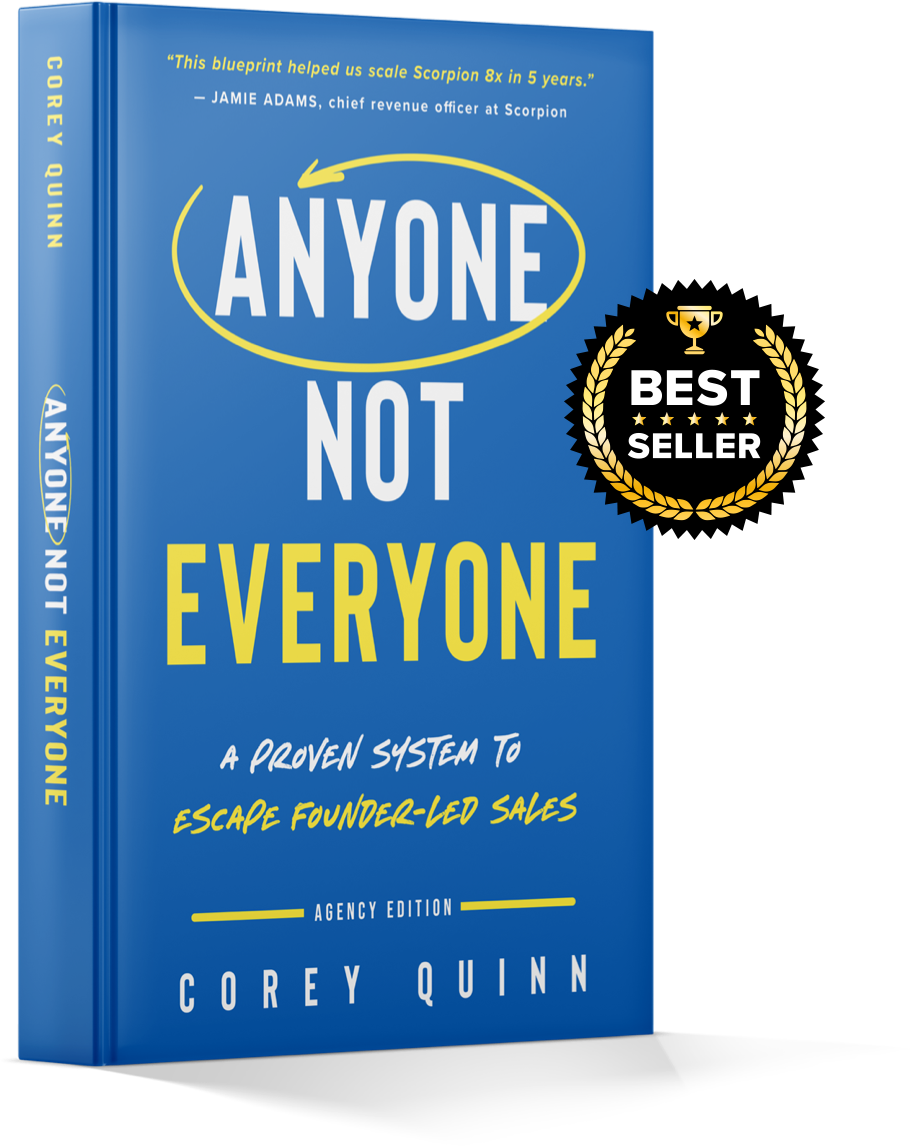
Corey helps founder-led agencies scale through Deep Specialization™ and programmatic M&A. Former CMO of Scorpion ($20M to $200M). Author of "Anyone, Not Everyone."