Common & broad or unique & specific
Corey Quinn
Founder, Deep Specialization™
Which go-to-market strategy should you run: a common problem for a broad audience, or a unique problem for a specific audience? Learn why unique and specific wins.
Which strategy should you run?
Solve a common problem for a broad audience or a unique problem for a specific audience?
Go unique and specific.
Why?
You'll have a much better shot at finding revenue that scales.
And in time, you'll grow to join the ranks of today's giants who also started this way.
Amazon
Uber
AirBNB
... the list goes on.
Frequently Asked Questions
What are the two go-to-market strategy options being compared here?
Solving a common problem for a broad audience, versus solving a unique problem for a specific audience, two fundamentally different starting points for building a scalable business.
Why does solving a unique problem for a specific audience offer a better shot at scalable revenue?
Because specificity creates real differentiation and depth, a stronger foundation for growth than competing broadly on a common problem where differentiation is much harder to establish.
What do companies like Amazon, Uber, and Airbnb have in common with this strategy?
They all started by solving a unique problem for a specific audience before eventually scaling into the giants they are today, illustrating that starting narrow and specific doesn't cap long-term growth potential.
Does starting with a unique problem for a specific audience limit future growth?
Not necessarily, based on the examples given. Companies that started this way went on to scale significantly, suggesting that specificity at the start can actually be a foundation for larger growth later, not a limitation on it.
What's the practical takeaway from this comparison?
Choosing to go unique and specific from the start, rather than broad and common, based on the pattern shown by major companies that followed this same path before achieving massive scale.
About Corey Quinn
Founder, Deep Specialization™
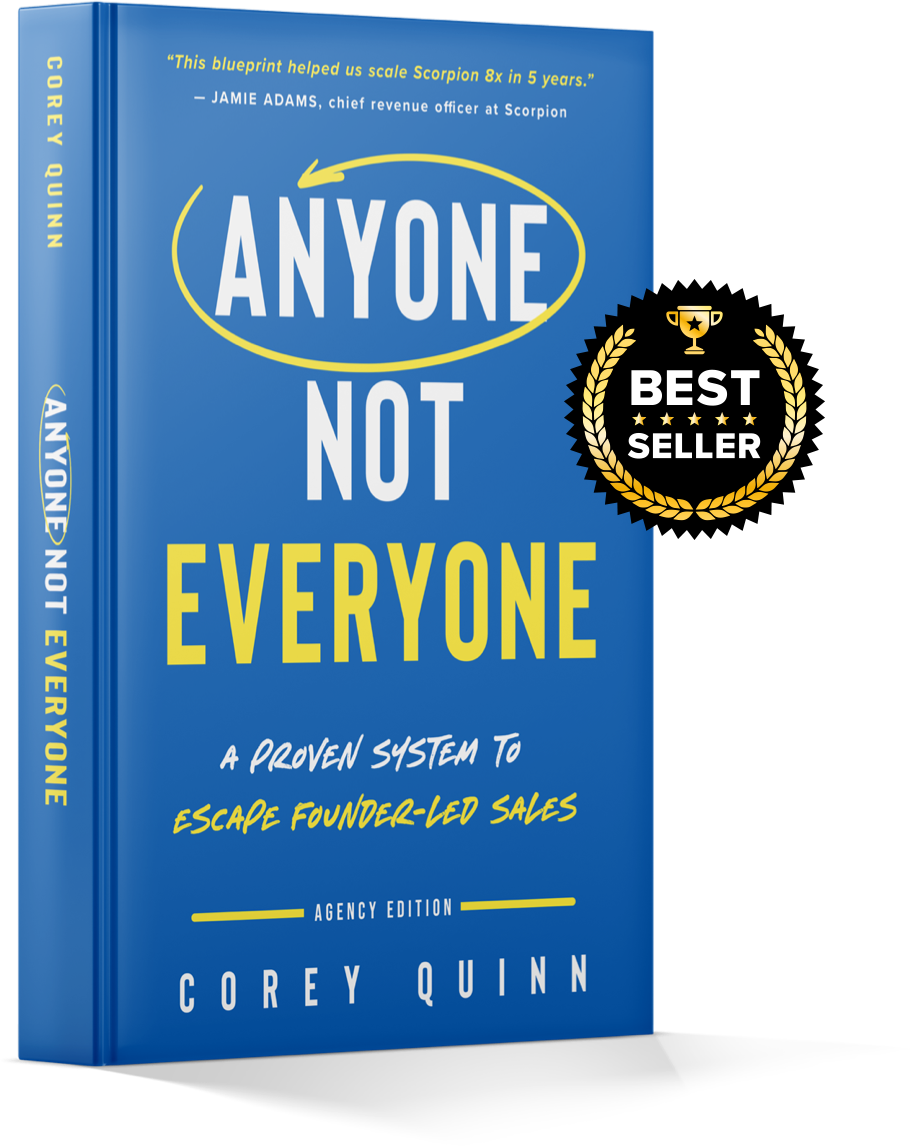
Corey helps founder-led agencies scale through Deep Specialization™ and programmatic M&A. Former CMO of Scorpion ($20M to $200M). Author of "Anyone, Not Everyone."